


Introduction
The financial services industry is evolving faster than ever, and Non-Banking Financial Companies (NBFCs) are at the center of this transformation. With rising competition from fintech startups and increasing customer expectations for instant services, traditional lending methods are no longer enough.
Manual processes, such as physical documentation, slow verification, and delayed approvals, are not only time-consuming but also prone to errors. This is where lending automation comes into play.
Automating lending allows NBFCs to digitize the entire loan lifecycle, from application to disbursement, making operations faster, more accurate, and highly scalable. In this blog, we’ll break down how NBFCs can automate lending, what technologies are involved, and how to successfully implement automation in your organization.
What is Lending Automation in NBFCs?
Lending automation is the use of technology to streamline and manage loan-related processes with minimal manual intervention. It involves digitizing workflows, integrating systems, and using data-driven tools to make faster and smarter decisions.
Traditional vs Automated Lending
In a traditional lending setup, customers fill out paper forms, documents are verified manually, and approvals can take days or even weeks. On the other hand, automated lending enables:
- Online applications accessible from any device
- Instant document verification using APIs
- Real-time credit assessment
- Faster approvals and disbursements
The shift from manual to automated systems significantly improves both efficiency and accuracy.
Why NBFCs Need Lending Automation
1. Growing Customer Expectations
Today’s customers expect quick and seamless experiences. Whether applying for a personal loan or business financing, they want instant approvals and minimal documentation. Automation helps meet these expectations by reducing turnaround time.
2. Increased Competition from Fintech
Fintech companies are leveraging technology to provide faster and more flexible lending solutions. To stay competitive, NBFCs must adopt similar or better digital capabilities.
3. Operational Efficiency
Manual processes require more manpower and time. Automation reduces dependency on human intervention, lowering operational costs and improving productivity.
4. Better Compliance and Reporting
Automated systems maintain accurate records, making it easier to comply with regulatory requirements and generate reports when needed.
Key Areas Where NBFCs Can Automate Lending
1. Digital Loan Applications
NBFCs can replace physical forms with digital applications that customers can fill out online. This not only saves time but also reduces data entry errors.
2. Automated KYC Verification
KYC (Know Your Customer) is a critical step in lending. By integrating with Aadhaar, PAN, and other verification APIs, NBFCs can complete KYC instantly.
3. Credit Scoring and Risk Assessment
Automation tools use algorithms and data analytics to evaluate a borrower’s creditworthiness in real time. This ensures faster and more accurate decision-making.
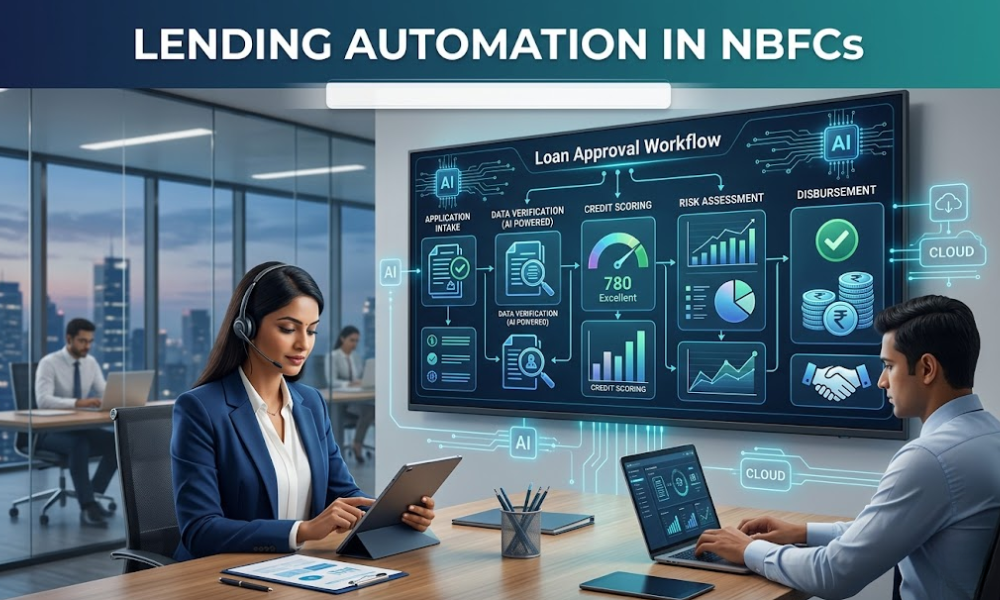
4. Loan Approval Workflow
Rule-based engines can automatically approve or reject loan applications based on predefined criteria such as income, credit score, and repayment history.
5. Loan Disbursement
Once approved, funds can be transferred directly to the borrower’s account without manual intervention, ensuring a seamless experience.
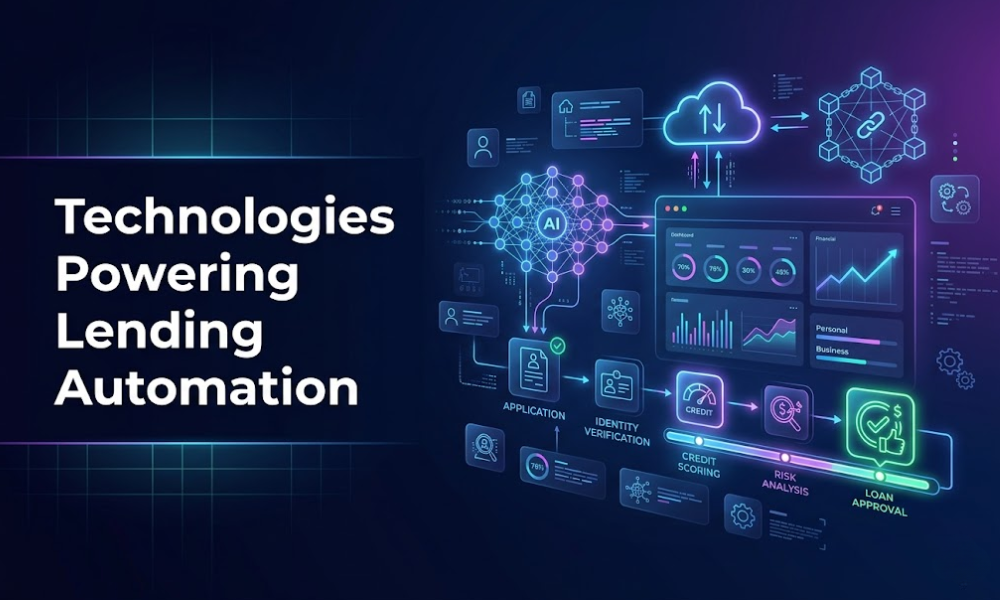
Technologies Powering Lending Automation
Artificial Intelligence (AI)
AI enables smart decision-making by analyzing large volumes of data and identifying patterns that humans might miss.
Machine Learning (ML)
ML models improve over time, making credit scoring and fraud detection more accurate.
API Integrations
APIs connect NBFC systems with external platforms like banks, credit bureaus, and KYC providers, enabling real-time data exchange.
Cloud Computing
Cloud-based systems offer flexibility, scalability, and secure data storage, making them ideal for modern lending platforms.
Benefits of Automating Lending for NBFCs
Faster Loan Processing
Automation reduces processing time from days to minutes, enabling quicker approvals.
Cost Reduction
By minimizing manual work, NBFCs can significantly cut operational expenses.
Improved Customer Experience
A smooth and fast process leads to higher customer satisfaction and retention.
Enhanced Risk Management
Data-driven insights help in better risk assessment and reduce default rates.
Scalability
Automation allows NBFCs to handle a larger number of applications without increasing resources.
Challenges in Implementing Lending Automation
1. Data Security and Privacy
Handling sensitive financial data requires robust security systems to prevent breaches and ensure customer trust.
2. Integration with Legacy Systems
Many NBFCs still use outdated systems that may not easily integrate with modern tools.
3. Regulatory Compliance
NBFCs must ensure that their automated processes comply with financial regulations and guidelines.
How NBFCs Can Get Started with Lending Automation
Step 1: Analyze Existing Processes
Identify manual and repetitive tasks that can be automated.
Step 2: Choose the Right Technology
Invest in a reliable Loan Management System that supports automation and compliance.
Step 3: Implement API Integrations
Connect with third-party services for KYC, credit scoring, and payment processing.
Step 4: Train Employees
Ensure your team understands how to use the new system effectively.
Step 5: Monitor and Improve
Track performance metrics and continuously optimize your processes.
Best Practices for Successful Automation
- Prioritize data security and compliance
- Focus on user-friendly design
- Start with small automation steps and scale gradually
- Use analytics to make informed decisions
Future of NBFC Lending Automation in India
The future of lending in India is digital-first. With increasing internet penetration and smartphone usage, customers are becoming more comfortable with online financial services.
AI-driven lending, real-time approvals, and personalized loan offers will soon become standard. NBFCs that adopt automation early will not only improve efficiency but also gain a significant competitive advantage.
Conclusion
Lending automation is no longer a luxury; it’s a necessity for NBFCs aiming to grow and stay competitive. By automating key processes such as loan applications, KYC, credit scoring, and disbursement, NBFCs can significantly improve efficiency, reduce costs, and deliver better customer experiences.
The transition may require initial investment and effort, but the long-term benefits far outweigh the challenges. If you want to scale your NBFC and future-proof your operations, now is the time to embrace lending automation.
FAQs
1. What is lending automation in NBFCs?
Lending automation is the use of digital tools to manage loan processes with minimal manual effort.
2. How does automation benefit NBFCs?
It improves efficiency, reduces costs, and enhances customer experience.
3. Is lending automation suitable for small NBFCs?
Yes, cloud-based solutions make automation accessible for businesses of all sizes.
4. What technologies are used in lending automation?
AI, machine learning, APIs, and cloud computing are commonly used.
5. How long does it take to implement lending automation?
It depends on the system and complexity but can range from a few weeks to a few months.
Call to Action
If you’re looking to streamline your lending operations and scale your NBFC, investing in a smart Loan Management System is the right step forward.
Start your digital transformation today and stay ahead in the competitive lending market.
