


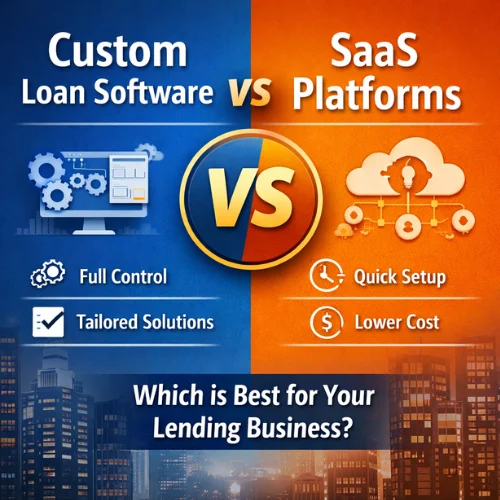
The lending industry is becoming more digital every year. Financial institutions, NBFCs, microfinance companies, and fintech startups are increasingly adopting technology to manage loan operations efficiently. A reliable loan management system helps automate the entire lending lifecycle, from borrower onboarding to repayment tracking.
However, when choosing the right technology solution, many lenders face an important decision: Should they invest in custom loan management software or use a market-ready SaaS loan platform?
Both options have their advantages and limitations. Some organizations prefer SaaS platforms because they are easy to start with, while others choose custom-built systems to gain more control and flexibility.
Understanding the differences between these two approaches is important before making a long-term technology investment. This article compares custom loan management software and SaaS loan platforms based on cost, time, flexibility, customization, and long-term maintenance.
Custom vs SaaS Loan Software
Loan management software helps lenders automate the entire lending lifecycle. This includes:
- Loan application processing
- Credit evaluation
- Document verification
- Loan approval workflows
- Disbursement tracking
- EMI and repayment management
- Reporting and compliance
Two main approaches are available in the market:
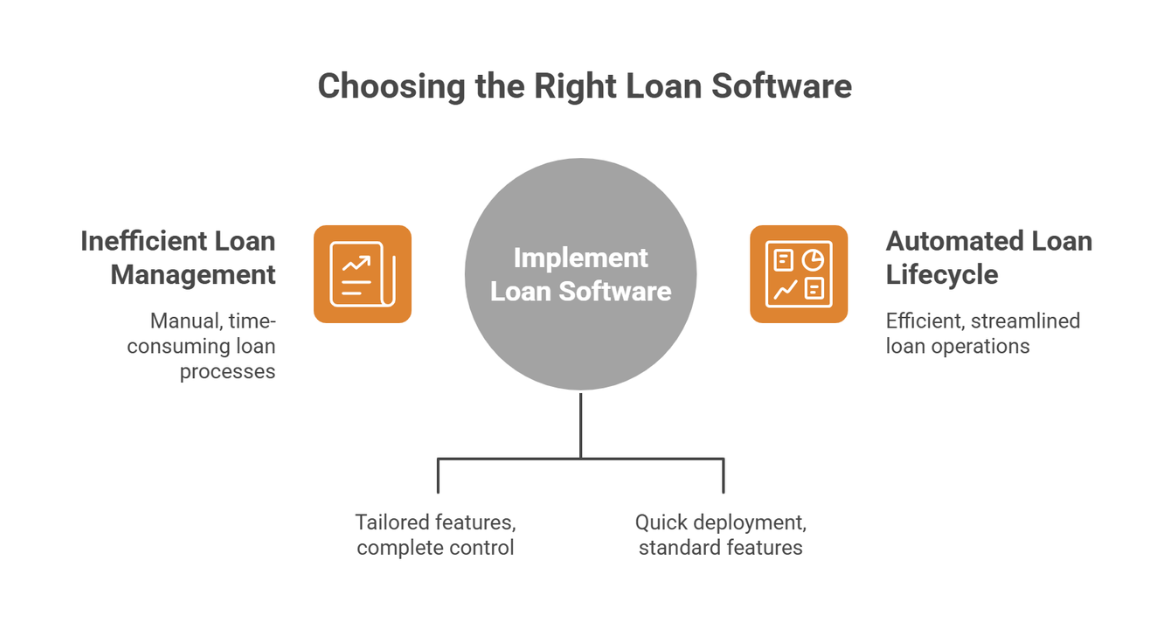
1. Custom Loan Management Software
Custom loan software is developed specifically for a financial institution. The features, workflow, and integrations are designed according to the company’s business model.
This option is commonly used by:
- NBFCs
- Microfinance institutions
- Nidhi companies
- Digital lending startups
- Large lending organizations with complex workflows
Because the system is built from scratch, the business has complete control over features, integrations, and scalability.
2. Market-Ready SaaS Loan Platforms
SaaS (Software-as-a-Service) loan platforms are ready-made solutions offered by software providers. Businesses subscribe to the platform and start using it immediately.
SaaS loan software typically includes standard features such as:
- Loan origination
- Customer management
- EMI tracking
- Reporting dashboards
While these platforms are quick to deploy, they may have limited flexibility compared to custom systems.
Cost & Time
One of the biggest differences between custom loan software and SaaS platforms is initial cost and implementation time.
SaaS Loan Software Cost
SaaS platforms usually operate on a monthly or yearly subscription model.
Advantages:
- Lower upfront investment
- Faster implementation
- No development cost
However, over time the total cost can increase due to:
- Subscription fees
- User license charges
- Additional feature costs
- Integration charges
For growing lending companies, SaaS costs can become significant after a few years.
Custom Loan Management Software Cost
Custom loan software requires higher initial development investment, but it offers long-term benefits.
Advantages include:
- No recurring subscription fees
- Ownership of the platform
- Ability to scale without per-user charges
Although development may take several weeks or months, the system is built according to the lender’s operational needs.
For many NBFCs and fintech companies, custom loan management software becomes more cost-effective in the long run.
Control & Flexibility
Control over technology is another important factor when choosing between custom software and SaaS platforms.
SaaS Platforms: Limited Control
In SaaS systems:
- The software provider controls updates
- Feature changes depend on the vendor
- Custom integrations may be restricted
Businesses must adapt their processes according to the platform’s structure.
For organizations with simple lending operations, this may work well. But companies with unique workflows or compliance requirements may face limitations.
Custom Loan Software: Full Control
With custom loan management software, businesses have full authority over:
- Features
- User roles and permissions
- Loan workflows
- Integration with third-party tools
This flexibility is especially useful for:
- NBFCs with multiple loan products
- Microfinance institutions managing group lending
- Fintech startups building digital lending platforms
The ability to modify the system anytime helps businesses adapt quickly to market changes.
Customization
Customization is often the most important factor for financial institutions choosing lending software.
Customization in SaaS Loan Platforms
Most SaaS platforms offer basic configuration options such as:
- Loan product settings
- Interest rate configuration
- Basic reporting
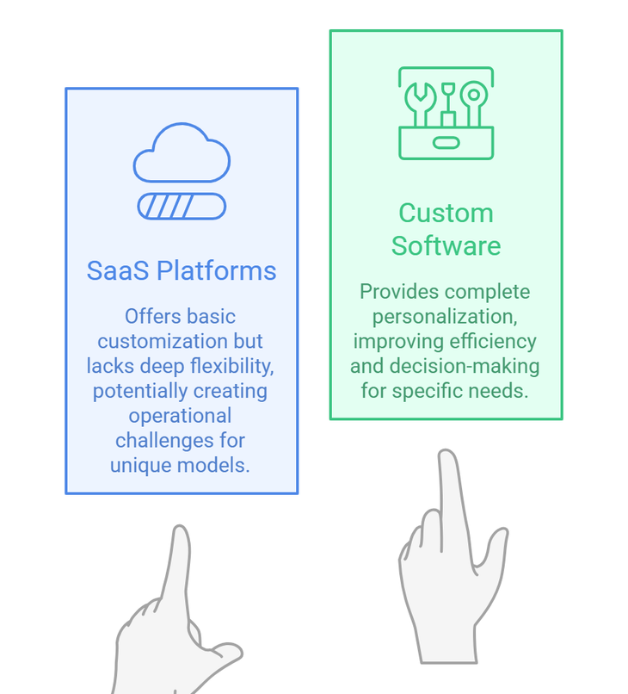
However, deep customization is usually limited.
Examples of limitations may include:
- Fixed approval workflows
- Limited integration options
- Restricted UI changes
- Dependency on vendor roadmap
For lenders with unique operational models, these restrictions can create operational challenges.
Customization in Custom Loan Management Software
Custom software allows complete personalization of the platform.
Examples include:
- Custom loan approval workflows
- Automated credit scoring models
- Integration with credit bureaus
- KYC and document verification systems
- Custom dashboards and reports
Organizations can design the platform according to their exact lending process, improving efficiency and decision-making.
Maintenance
Technology maintenance is another key consideration when comparing SaaS loan platforms and custom solutions.
SaaS Platform Maintenance
In SaaS platforms, maintenance is handled by the software provider.
This includes:
- System updates
- Security patches
- Server maintenance
- Performance optimization
This reduces the technical burden on the business. However, it also means that businesses depend on the vendor for upgrades and issue resolution.
Custom Loan Software Maintenance
With custom loan management software, maintenance can be handled by the development partner or internal IT team.
Typical maintenance activities include:
- Feature updates
- Security monitoring
- System upgrades
- Performance improvements
While this requires ongoing technical support, it also gives organizations greater control over system improvements and innovation.
Final Recommendation
Both custom loan management software and SaaS loan platforms serve important roles in the fintech ecosystem.
Choosing the right solution depends on the scale and complexity of your lending operations.
SaaS loan platforms are suitable for:
- Small lending startups
- Businesses looking for quick deployment
- Organizations with simple lending workflows
Custom loan management software is ideal for:
- NBFCs and financial institutions
- Microfinance organizations
- Lending businesses with multiple loan products
- Companies planning long-term growth
Custom software offers greater flexibility, deeper customization, and better long-term scalability, making it a preferred choice for many growing fintech companies.
At Grin Technologies, we help financial institutions build secure, scalable, and customized loan management software designed specifically for their operational needs.
With the right technology partner, lenders can streamline loan processing, improve risk management, and deliver better experiences to borrowers.
