

Introduction
If you are planning to digitize your lending operations, one of the first questions that comes to mind is: What is the Loan Management Software Cost in India?
The answer depends on several factors, including the size of your business, the number of borrowers, required features, customization needs, and deployment model.
In India, the cost of Loan Management Software can range from ₹25,000 per year for basic cloud-based solutions to several lakhs for enterprise-grade platforms. Understanding these costs before investing can help lenders avoid hidden expenses and choose a solution that delivers long-term value.
In this guide, we will explore Loan Management Software pricing in India, the factors that influence costs, implementation considerations, and how to select the right platform for your lending business.
What is Loan Management Software?
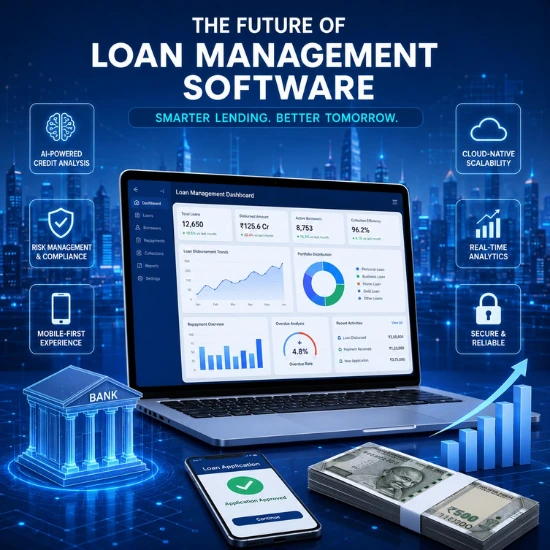
Loan Management Software (LMS) is a digital platform that automates and manages the complete loan lifecycle, from loan origination and approval to repayment tracking, collections, reporting, and compliance management.
The software helps lenders reduce manual work, improve operational efficiency, and enhance customer experience.
Core Functions of Loan Management Software
- Loan application processing
- Credit assessment and verification
- EMI calculation and repayment scheduling
- Automated payment reminders
- Collection management
- Customer portal and borrower management
- Regulatory compliance reporting
- Accounting and financial integration
- Risk monitoring and analytics
Today, Loan Management Software is widely used by:
- NBFCs
- Banks
- Microfinance Institutions (MFIs)
- Fintech Companies
- Nidhi Companies
- Cooperative Societies
- Consumer Lending Businesses
- Gold Loan Providers
- Vehicle Finance Companies
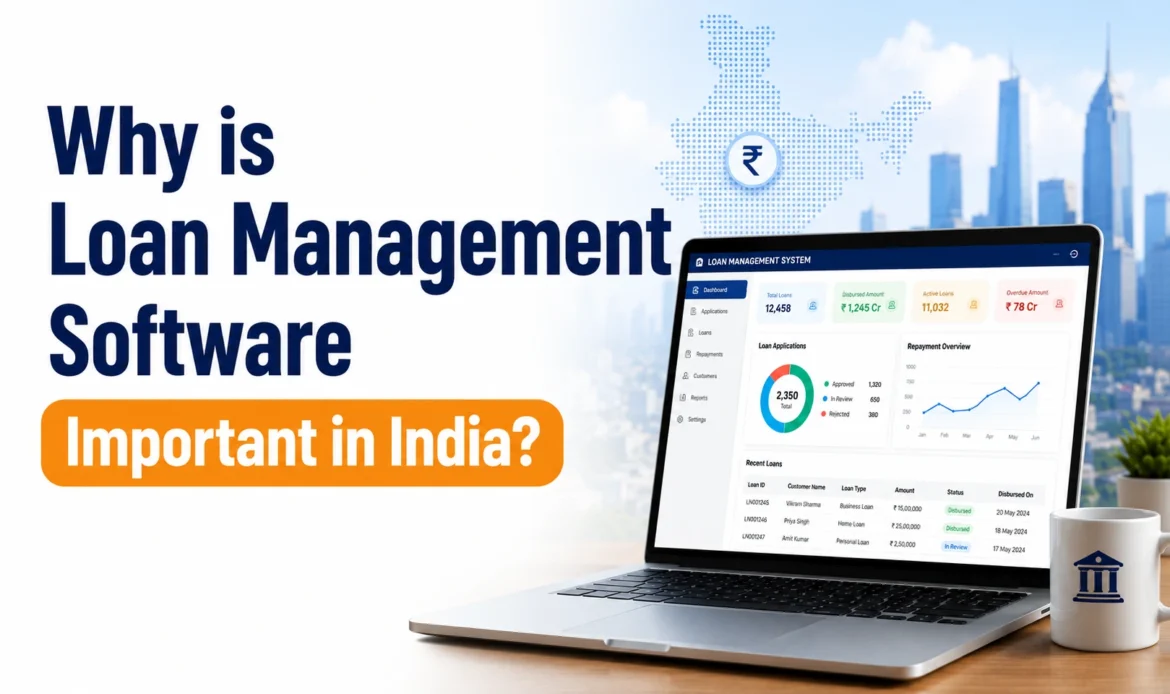
Why is Loan Management Software Important in India?
India’s lending ecosystem is rapidly evolving. Digital lending has become a major growth driver for financial institutions.
Manual loan management processes often lead to:
- Data entry errors
- Delayed approvals
- Poor customer experience
- Increased operational costs
- Collection inefficiencies
- Regulatory compliance risks
Key Business Benefits
1. Faster Loan Processing
Automation reduces approval time from days to hours, improving customer satisfaction.
2. Reduced Operational Costs
Organizations can significantly reduce paperwork, manual data entry, and administrative overhead.
3. Better Collection Efficiency
Automated reminders, payment tracking, and collection workflows help reduce delinquency rates.
4. Improved Compliance
The software helps maintain regulatory records and generates audit-ready reports.
5. Scalability
As loan portfolios grow, software can handle increasing transaction volumes without requiring proportional staff increases.
Loan Management Software Cost in India
The cost of Loan Management Software varies significantly based on business requirements.
Typical Pricing Range in India
| Software Type | Estimated Cost |
| Basic Cloud LMS | ₹25,000 – ₹1,00,000/year |
| Mid-Sized NBFC Solution | ₹1,00,000 – ₹5,00,000/year |
| Enterprise Loan Management Platform | ₹5,00,000 – ₹25,00,000+ |
| Custom-Built Solution | ₹10,00,000 – ₹50,00,000+ |
These figures are indicative and may vary based on vendor offerings and customization requirements.
Factors Affecting Loan Management Software Cost in India
1. Deployment Model
Cloud-Based Software
Cloud solutions generally have lower upfront costs and are offered through subscription models.
Benefits include:
- Lower initial investment
- Faster deployment
- Automatic updates
- Remote accessibility
On-Premise Software
On-premise solutions require infrastructure investment and higher implementation costs.
Benefits include:
- Greater control
- Enhanced customization
- Internal data hosting
2. Number of Users
Most vendors price software based on user licenses.
Examples:
- Small teams (5–10 users)
- Medium businesses (20–50 users)
- Enterprise organizations (100+ users)
More users generally increase subscription costs.
3. Loan Portfolio Size
Many providers charge based on:
- Number of active loans
- Number of borrowers
- Monthly transactions
A lender managing 500 loans will typically pay less than one managing 100,000 loans.
4. Customization Requirements
Standard software packages are usually more affordable.
Customization increases costs because of:
- Custom workflows
- Unique lending products
- Additional integrations
- Specialized reporting requirements
5. Integration Requirements
Integration with third-party systems can impact pricing.
Common integrations include:
- Accounting software
- Payment gateways
- SMS gateways
- WhatsApp APIs
- Credit bureaus
- eKYC providers
- Banking systems
The more integrations required, the higher the implementation cost.
6. Compliance Features
Financial institutions often require advanced compliance tools.
Examples include:
- RBI compliance reporting
- KYC management
- Audit trails
- Data security controls
- Risk monitoring
These features typically increase software costs but provide significant long-term value.
Hidden Costs to Consider
Many organizations focus only on subscription fees and overlook additional expenses.
Potential Hidden Costs
Implementation Charges
Initial setup and configuration may involve one-time fees.
Data Migration
Migrating legacy loan data can require additional investment.
Training Costs
Employee onboarding and training may be charged separately.
Custom Development
Feature enhancements often come with additional development fees.
Support and Maintenance
Premium support packages can increase annual costs.
Before selecting a vendor, request a complete pricing breakdown.
When Should You Invest in Loan Management Software?
Consider implementing Loan Management Software if:
Your Loan Portfolio is Growing
Manual processes become difficult to manage as loan volume increases.
Collection Efficiency is Declining
Software helps automate follow-ups and repayment tracking.
Regulatory Requirements are Increasing
Digital systems simplify compliance management.
Customers Expect Faster Service
Modern borrowers demand quick approvals and online access.
Business Expansion is Planned
A scalable software platform supports future growth.
How to Choose the Right Loan Management Software
Choosing solely based on price can be a costly mistake.
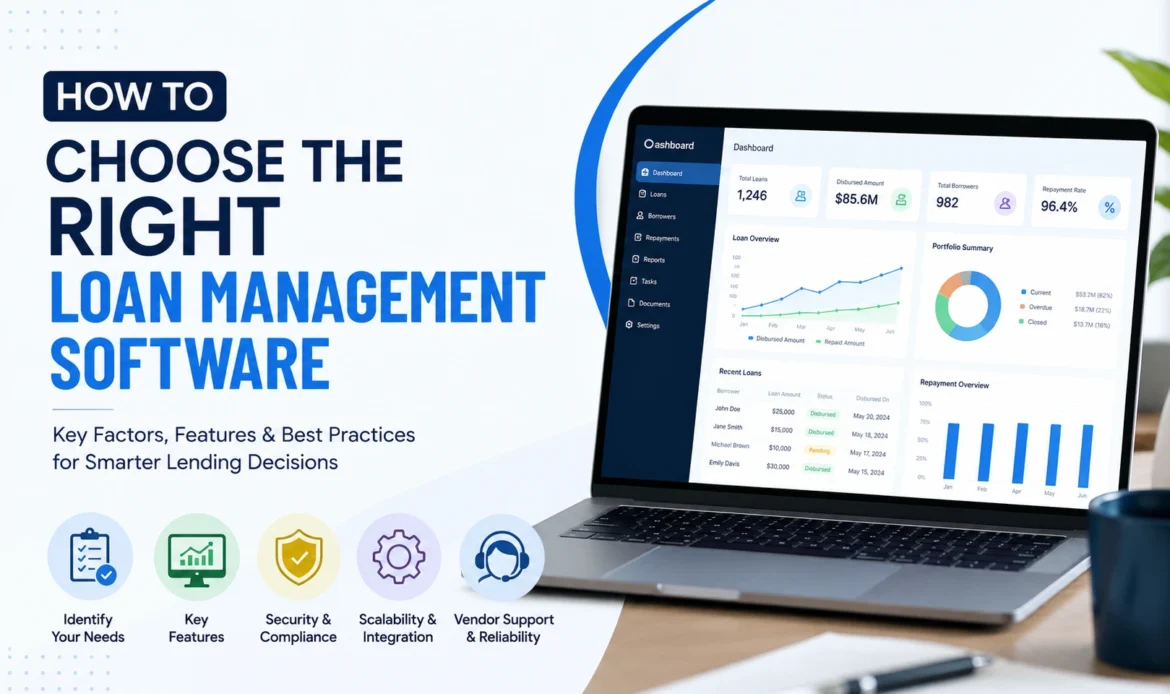
Follow these steps:
Step 1: Define Business Requirements
Identify:
- Loan products
- Customer volume
- Compliance needs
- Collection processes
Step 2: Evaluate Scalability
Choose software that can support future growth.
Step 3: Assess Security Features
Look for:
- Data encryption
- Role-based access
- Audit logs
- Backup systems
Step 4: Review Integration Capabilities
Ensure compatibility with:
- Payment systems
- Accounting platforms
- CRM software
- Digital onboarding tools
Step 5: Compare Total Cost of Ownership
Evaluate:
- Licensing
- Implementation
- Support
- Maintenance
- Future upgrades
The cheapest software is not always the most cost-effective option.
Real-World Example
Consider an NBFC managing 10,000 active loans.
Without automation:
- Manual EMI tracking
- Delayed collections
- Multiple spreadsheets
- Increased staffing costs
With a Loan Management Software platform:
- Automated collections
- Real-time reporting
- Faster loan approvals
- Better portfolio visibility
Although the software may cost several lakhs annually, operational savings and improved recovery rates often generate a strong return on investment.
Future Trends Affecting Loan Management Software Pricing
The Indian lending industry is rapidly adopting advanced technologies.
Key trends include:
- Artificial Intelligence (AI) underwriting
- Predictive collection analytics
- Digital loan origination
- API-driven lending ecosystems
- Mobile-first borrower platforms
- Automated compliance management
As vendors introduce advanced features, pricing models are expected to become more value-based rather than purely user-based.
Frequently Asked Questions (FAQs)
1. What is the average Loan Management Software Cost in India?
Most businesses spend between ₹1 lakh and ₹5 lakh annually for a professional Loan Management Software solution, depending on features and business size.
2. Is cloud-based Loan Management Software cheaper than on-premise software?
Yes. Cloud-based solutions usually have lower upfront costs and require no infrastructure investment.
3. What factors increase Loan Management Software pricing?
Major factors include customization, integrations, user count, loan volume, compliance requirements, and deployment model.
4. Can small NBFCs afford Loan Management Software?
Yes. Many vendors offer affordable cloud-based subscription plans suitable for small and growing NBFCs.
5. How much does custom Loan Management Software development cost in India?
Custom development typically ranges from ₹10 lakh to ₹50 lakh or more depending on complexity and features.
6. Is implementation included in the software cost?
Not always. Many vendors charge separately for implementation, training, and data migration.
7. How can businesses reduce Loan Management Software costs?
Choose scalable cloud solutions, avoid unnecessary customizations, and compare total ownership costs rather than only subscription fees.
Conclusion
Understanding the Loan Management Software Cost in India is essential before investing in a lending technology platform. While pricing varies based on features, users, loan volume, and deployment type, the right solution can significantly improve efficiency, compliance, collections, and customer experience.
Rather than focusing solely on upfront pricing, evaluate the overall business value, scalability, and return on investment. A well-chosen Loan Management Software platform can become a strategic asset that supports long-term growth in India’s competitive lending market.
Looking for the right Loan Management Software for your NBFC, MFI, Nidhi Company, or lending business? Compare features, pricing, scalability, and support options before making a decision. If you found this guide helpful, share it with your team and explore our other lending technology resources.

