


Introduction
Every lending business faces one common challenge: ensuring borrowers repay their loans on time.
Whether you are an NBFC, bank, microfinance institution, fintech lender, or credit cooperative, your profitability depends not only on loan disbursement but also on successful loan recovery. Even a strong loan portfolio can become risky if collection processes are inconsistent or ineffective.
This is where Loan Collection Best Practices play a crucial role. A well-structured collection strategy helps lenders improve recovery rates, reduce delinquency, maintain healthy cash flow, and strengthen customer relationships.
In today’s competitive lending market, successful collections are no longer about repeated follow-ups. They are about understanding borrower behavior, using technology effectively, and creating a smooth repayment experience.
This guide explains the most effective loan collection best practices that lenders in India can implement to improve collection performance and reduce defaults.
What Are Loan Collection Best Practices?
Loan Collection Best Practices refer to the proven methods, processes, and strategies lenders use to collect repayments efficiently while maintaining customer trust and regulatory compliance.
The objective is simple:
Recover dues on time while preserving borrower relationships.
A strong collection framework includes:
- Timely borrower communication
- Risk-based account management
- Automated payment reminders
- Collection performance tracking
- Compliance-focused recovery processes
- Digital payment options
When these elements work together, lenders can significantly improve repayment behavior and reduce collection costs.
Why Loan Collection Best Practices Are Important
Many lenders focus heavily on loan origination but overlook the importance of collections. In reality, collections directly influence business sustainability.
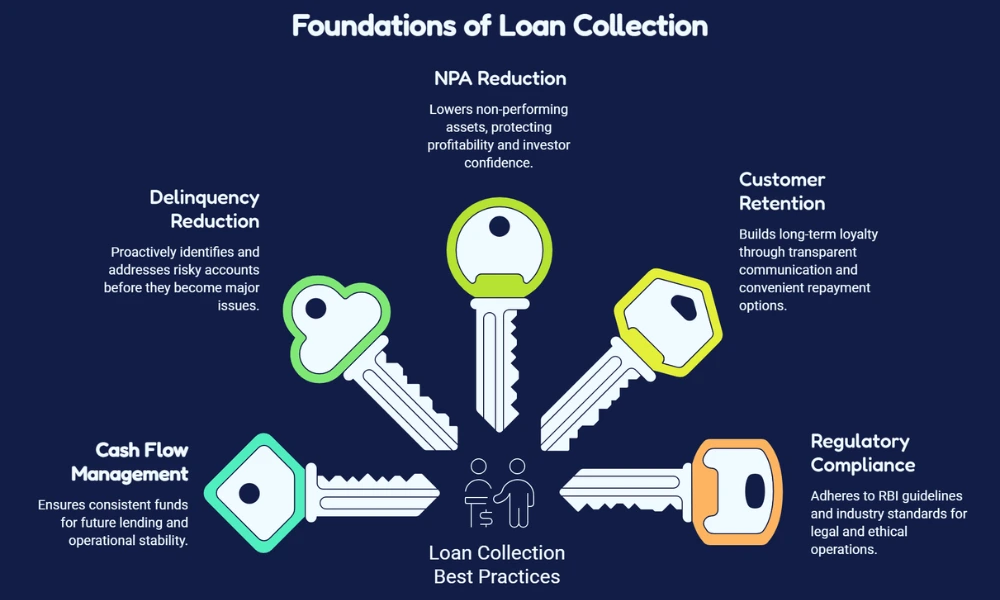
Better Cash Flow Management
Regular repayments ensure that funds remain available for future lending activities. Consistent cash flow supports business growth and operational stability.
Reduced Delinquency Rates
A proactive collection process helps identify risky accounts before they become major recovery challenges.
Lower Non Performing Assets (NPA)
Effective collections help reduce NPA levels, protecting profitability and investor confidence.
Improved Customer Retention
Borrowers appreciate transparent communication and convenient repayment options. A positive experience increases long-term customer loyalty.
Strong Regulatory Compliance
Following structured collection practices helps lenders remain compliant with RBI guidelines and industry standards.
Common Challenges in Loan Collections
Before implementing solutions, lenders should understand the common obstacles that affect recovery performance.
Missed EMI Payments
Borrowers may forget repayment dates due to busy schedules or lack of reminders.
Manual Collection Processes
Spreadsheet-based tracking often results in delayed actions and operational inefficiencies.
Lack of Borrower Segmentation
Treating all borrowers the same prevents collection teams from prioritizing high-risk accounts effectively.
Rising Collection Costs
Frequent calling, field visits, and manual follow-ups increase operational expenses.
Poor Customer Communication
Unclear communication often leads to disputes and reduced repayment cooperation.
Top Loan Collection Best Practices
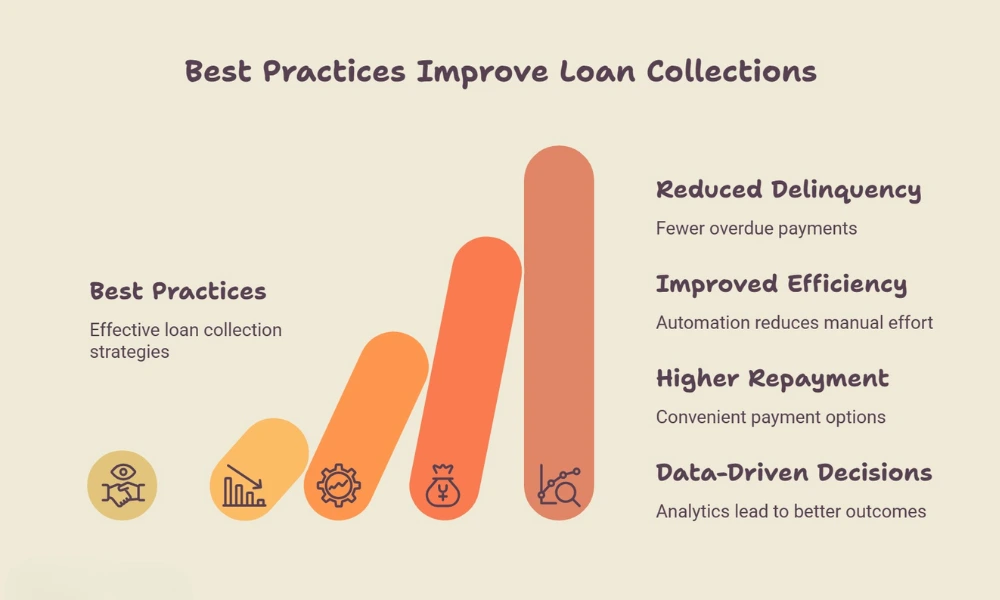
1. Start Communication Before the Due Date
The best collections begin before a payment becomes overdue.
Send reminders:
- Seven days before EMI due date
- Three days before due date
- One day before due date
Preventive communication is often more effective than recovery communication.
Many borrowers simply need a timely reminder to make their payment.
2. Segment Borrowers Based on Risk
Not all borrowers require the same collection approach.
Create categories based on:
- Repayment history
- Credit profile
- Loan amount
- Delinquency level
- Customer behavior
This allows collection teams to focus on accounts that require immediate attention.
3. Automate Collection Workflows
Automation helps lenders reduce manual effort and improve consistency.
Automate:
- SMS reminders
- Email notifications
- WhatsApp messages
- Payment links
- Follow-up schedules
Automation improves collection efficiency while reducing operational costs.
4. Offer Multiple Payment Options
Borrowers are more likely to pay on time when repayment methods are convenient.
Provide options such as:
- UPI
- Net Banking
- Debit Cards
- Credit Cards
- Mobile Wallets
- Auto Debit Mandates
The easier the payment process, the higher the collection success rate.
5. Monitor Early Warning Indicators
Delinquency rarely occurs without warning signs.
Watch for:
- Frequent late payments
- EMI bounce history
- Broken payment commitments
- Reduced borrower engagement
Identifying risk early allows collection teams to intervene before accounts become difficult to recover.
6. Use Collection Analytics
Modern collection strategies rely on data rather than assumptions.
Track key metrics such as:
Recovery Rate
Measures the percentage of overdue payments successfully recovered.
Collection Efficiency Ratio
Evaluates the effectiveness of collection efforts.
Days Past Due (DPD)
Tracks how long payments remain overdue.
Roll Rate Analysis
Measures movement from one delinquency stage to another.
Data-driven decisions lead to better collection outcomes.
7. Maintain Professional Communication
Borrowers should always be treated respectfully.
Collection agents should focus on:
- Clear communication
- Professional conduct
- Accurate information
- Solution-oriented discussions
Respectful interactions often result in higher repayment cooperation.
8. Create a Structured Escalation Process
Every lender should have a clearly defined collection workflow.
Stage 1: Friendly Reminder
Initial communication before and shortly after due dates.
Stage 2: Collection Follow Up
Direct engagement through calls and messages.
Stage 3: Escalation Review
Senior collection officers review unresolved cases.
Stage 4: Recovery Action
Formal recovery procedures for severely overdue accounts.
A structured process improves accountability and consistency.
9. Invest in Loan Management Software
Modern Loan Management Software helps streamline collection operations.
Key benefits include:
- Automated reminders
- Real-time borrower tracking
- Collection dashboards
- Payment monitoring
- Reporting and analytics
- Compliance management
Technology enables lenders to scale collections without significantly increasing manpower.
10. Continuously Train Collection Teams
Collection success depends on both systems and people.
Training should cover:
- Customer communication
- Negotiation skills
- Compliance requirements
- Collection strategies
- Product knowledge
Well-trained teams achieve better recovery rates while maintaining customer satisfaction.
How to Implement Loan Collection Best Practices
Step 1: Assess Current Collection Performance
Review recovery rates, delinquency levels, and collection costs.
Step 2: Define Collection Policies
Create clear procedures for reminders, follow-ups, and escalations.
Step 3: Introduce Automation
Implement digital tools to reduce manual work.
Step 4: Monitor Key Performance Indicators
Track DPD, recovery rates, and collection efficiency regularly.
Step 5: Continuously Improve Processes
Review performance reports and optimize collection strategies based on results.
Benefits of Following Loan Collection Best Practices
Organizations that implement strong collection frameworks often experience:
- Higher recovery rates
- Lower delinquency levels
- Reduced collection expenses
- Better customer satisfaction
- Improved cash flow
- Stronger portfolio quality
- Greater regulatory compliance
These benefits contribute directly to long-term business growth.
Conclusion
Effective collections are not built on pressure. They are built on consistency, planning, communication, and operational discipline.
The most successful lenders focus on prevention rather than recovery. They engage borrowers early, simplify repayments, monitor risks proactively, and use technology to improve efficiency.
By implementing these Loan Collection Best Practices, lenders can improve recovery performance, reduce operational costs, strengthen customer relationships, and maintain a healthier loan portfolio.
As lending becomes increasingly competitive, organizations with strong collection processes will be better positioned for sustainable growth and profitability.
Frequently Asked Questions (FAQs)
What are Loan Collection Best Practices?
Loan Collection Best Practices are proven methods used by lenders to improve repayment rates, reduce defaults, and enhance collection efficiency.
Why are loan collections important for NBFCs?
Loan collections help maintain cash flow, reduce NPAs, improve profitability, and support future lending operations.
How can technology improve loan collections?
Technology automates reminders, tracks repayments, provides analytics, and improves collection efficiency.
What is the most important collection KPI?
Days Past Due (DPD), Recovery Rate, and Collection Efficiency Ratio are among the most important collection metrics.
How often should borrowers receive payment reminders?
Most lenders send reminders before the due date and follow up immediately after missed payments.
Can Loan Management Software improve recovery rates?
Yes. Loan Management Software helps automate collection activities, improve borrower engagement, and track collection performance.
What is the biggest mistake lenders make in collections?
One of the biggest mistakes is waiting until payments become significantly overdue before initiating collection efforts.
Ready to Automate Your Lending Process?
Looking for a smarter way to manage loans, collections, and repayments?
👉 Book a Free Demo and see how Grin Technologies’ Loan Management Software can simplify your lending operations.

