

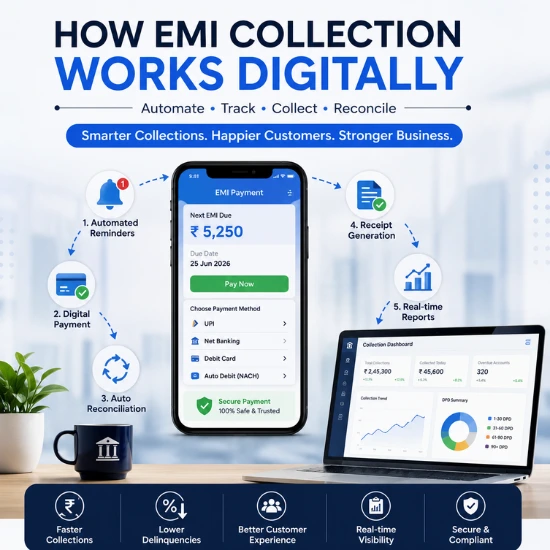
Managing EMI collections manually is becoming increasingly difficult for modern lenders. With growing loan portfolios, customer expectations, and regulatory requirements, digital EMI collection systems have become essential for NBFCs, microfinance institutions, cooperative societies, and fintech lenders.
This guide explains how digital EMI collection works, the technologies involved, and why leading lenders are moving away from manual collection methods.
What is Digital EMI Collection?
Digital EMI collection is the process of automatically collecting loan installments from borrowers through electronic payment channels without requiring manual intervention.
Instead of field agents collecting cash or staff manually tracking payments, a digital collection system automates:
- EMI reminders
- Payment collection
- Receipt generation
- Reconciliation
- Defaulter tracking
- Collection reporting
The entire process is managed through a Loan Management System (LMS), reducing errors and improving collection efficiency.
Why Traditional EMI Collection Creates Challenges
Many lenders still rely on spreadsheets, manual calling, and offline payment tracking.
Common challenges include:
| Traditional Collection Method | Challenges |
| Manual phone reminders | Time-consuming |
| Cash collections | Security risks |
| Excel tracking | Data inaccuracies |
| Physical receipts | Difficult auditing |
| Manual reconciliation | Delayed reporting |
| Field collection dependency | High operational cost |
As loan portfolios grow, these inefficiencies directly impact profitability and collection performance.
How Digital EMI Collection Works
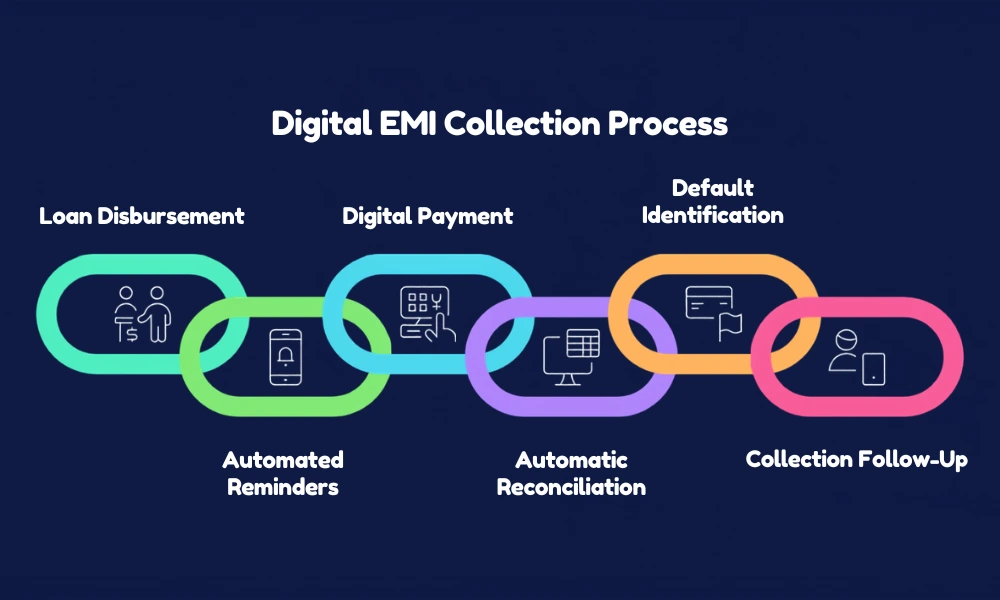
Step 1: Loan Disbursement and EMI Schedule Creation
Once a loan is approved and disbursed, the Loan Management System automatically generates:
- EMI amount
- Due dates
- Interest calculation
- Repayment schedule
- Outstanding balance
The borrower’s complete repayment calendar is stored within the system.
Step 2: Automated EMI Reminders
Before the due date, the LMS automatically sends reminders through:
- SMS
- Mobile App Notifications
This proactive communication significantly improves repayment rates.
Example Reminder
Dear Customer, your EMI of ₹5,250 is due on 25 June 2026. Click here to make payment securely.
Step 3: Digital Payment Collection
Borrowers can pay EMIs using multiple payment methods:
- UPI
- Net Banking
- Debit Card
- Credit Card
- Auto Debit Mandate
- NACH
- eNACH
- Payment Gateway Links
The payment gets reflected instantly in the LMS dashboard.
Step 4: Automatic Payment Reconciliation
One of the biggest advantages of digital collections is automatic reconciliation.
When payment is received:
- Loan account updates automatically
- Outstanding balance adjusts instantly
- Receipt is generated automatically
- Collection reports are updated in real time
No manual entry is required.
Step 5: Defaulter Identification
If payment is not received by the due date, the system automatically flags overdue accounts.
Collection teams can instantly identify:
- 1-30 DPD Accounts
- 31-60 DPD Accounts
- 61-90 DPD Accounts
- NPA Risk Accounts
This enables faster recovery actions.
Step 6: Collection Follow-Up Workflow
Modern collection software automatically assigns follow-up activities.
Examples include:
- Reminder Calls
- WhatsApp Follow-Ups
- Field Visits
- Escalation Cases
- Legal Notices
Every interaction is recorded in the system.
Digital EMI Collection Workflow
Loan Disbursed
↓
EMI Schedule Created
↓
Automated Reminders
↓
Borrower Makes Payment
↓
Payment Gateway Processes Transaction
↓
Loan Management Software Updates Account
↓
Receipt Generated
↓
Reports Updated
Key Components of a Digital EMI Collection System
Loan Management Software (LMS)
The LMS acts as the central platform that manages:
- Loan Accounts
- EMI Tracking
- Customer Data
- Collections
- Reporting
Payment Gateway Integration
Allows borrowers to make online payments securely.
Popular payment gateways in India include:
- Razorpay
- Cashfree
- PayU
- Eazy Collect
NACH and eNACH
Automates recurring EMI deductions directly from customer bank accounts.
Communication Engine
Handles:
- SMS alerts
- WhatsApp notifications
- Email reminders
LMS Dashboard Example
Suggested Screenshot Section
Insert screenshots showing:
- EMI Collection Dashboard
- Overdue Loan Report
- Collection Performance Report
- Borrower Payment History
- Daily Collection Summary
Image Alt Text Example
Loan Management Software EMI Collection Dashboard showing repayment tracking and overdue account monitoring.
Real NBFC Use Cases
Microfinance Institution
A microfinance lender with 20,000 active borrowers reduced collection delays by implementing automated SMS reminders and UPI payment links.
Results:
- Faster collections
- Lower operational costs
- Improved customer experience
Consumer Finance Company
A consumer loan provider integrated eNACH mandates for recurring collections.
Results:
- Higher on-time repayment rates
- Reduced collection team workload
- Better cash flow forecasting
Vehicle Finance NBFC
A vehicle finance company automated overdue tracking and field collection management.
Results:
- Improved recovery efficiency
- Better collection visibility
- Faster delinquency management
Benefits of Digital EMI Collection
Higher Collection Efficiency
Automation eliminates repetitive manual tasks.
Better Customer Experience
Customers can pay anytime using their preferred payment method.
Reduced Collection Costs
Fewer resources are required for follow-ups and reconciliation.
Real-Time Reporting
Management gets instant visibility into:
- Daily collections
- Outstanding portfolio
- Delinquency trends
- Recovery performance
Improved Regulatory Compliance
Digital records simplify audits and reporting.
Digital EMI Collection vs Manual EMI Collection
| Feature | Digital EMI Collection | Manual Collection |
| Payment Tracking | Real Time | Manual |
| Reminders | Automated | Manual |
| Reconciliation | Automatic | Manual |
| Reporting | Instant | Delayed |
| Customer Experience | Excellent | Average |
| Operational Cost | Lower | Higher |
| Error Rate | Minimal | Higher |
Essential Features to Look for in EMI Collection Software
Before choosing a platform, ensure it offers:
✔ Automated EMI reminders
✔ UPI collection links
✔ eNACH integration
✔ Collection tracking dashboard
✔ DPD monitoring
✔ Field collection management
✔ Real-time reports
✔ Mobile collection app
✔ Customer portal
✔ Regulatory compliance support
How Grin Technologies Helps Lenders Automate EMI Collections
At Grin Technologies, our Loan Management Software helps lenders streamline the complete loan lifecycle.
Key capabilities include:
- Automated EMI tracking
- Digital collection management
- Collection agent monitoring
- Real-time dashboards
- NACH and payment gateway integrations
- Loan portfolio analytics
- Customer communication automation
Whether you manage personal loans, group loans, microfinance loans, consumer finance, or NBFC lending, a digital collection ecosystem can significantly improve operational efficiency and repayment performance.
Frequently Asked Questions
1) What is digital EMI collection?
Digital EMI collection is the automated process of collecting loan installments through online payment channels such as UPI, NACH, payment gateways, and banking systems.
2) How does an LMS help in EMI collection?
A Loan Management System automates repayment tracking, reminders, payment reconciliation, reporting, and overdue management.
3) What payment methods are used for EMI collection?
Common payment methods include UPI, Net Banking, Debit Cards, Credit Cards, NACH, eNACH, and payment gateway links.
4) Can digital EMI collection reduce loan defaults?
Yes. Automated reminders and easier payment options improve repayment rates and reduce missed EMIs.
5) Is digital EMI collection suitable for NBFCs?
Yes. NBFCs, microfinance institutions, Nidhi companies, cooperative societies, and fintech lenders widely use digital collection systems to improve efficiency and compliance.
Ready to Automate Your Lending Process?
Looking for a smarter way to manage loans, collections, and repayments?
👉 Book a Free Demo and see how Grin Technologies’ Loan Management Software can simplify your lending operations.
Button
Book Free Demo

