

Introduction
The lending industry has undergone a significant transformation over the last few years. Customers no longer want to wait for days to get a loan approved or visit branches multiple times to complete paperwork. Instead, they expect a seamless digital experience with instant approvals, paperless documentation, real-time loan tracking, and convenient online repayment options.
For Non-Banking Financial Companies (NBFCs), meeting these expectations while managing increasing loan volumes is becoming increasingly challenging through traditional manual processes. Tasks such as customer onboarding, document verification, EMI calculations, repayment tracking, and regulatory reporting require considerable time and resources when handled manually. These inefficiencies often result in delayed loan approvals, operational bottlenecks, higher costs, and an inconsistent customer experience.
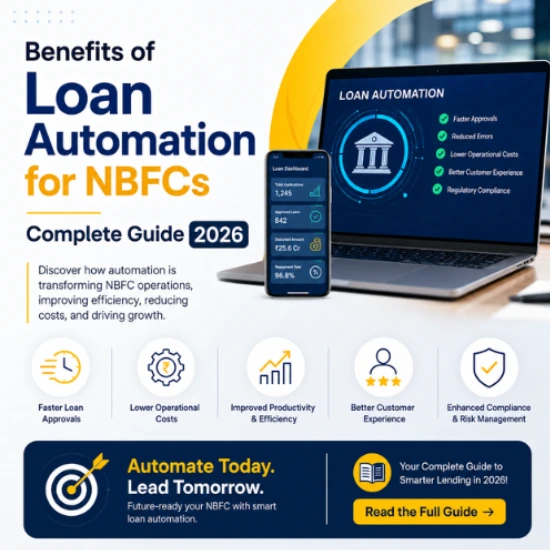
This is where Loan Automation becomes a game changer. By implementing a modern Loan Management Software (LMS), NBFCs can automate the entire lending lifecycle—from loan origination and KYC verification to loan disbursement, EMI collection, recovery management, and compliance reporting. Automation not only improves operational efficiency but also helps lenders reduce costs, minimize errors, increase collections, and deliver a superior customer experience.
In this comprehensive guide, we’ll explore the key benefits of loan automation for NBFCs, explain how it works, and discuss why adopting digital lending technology is essential for long-term business growth.
What is Loan Automation?
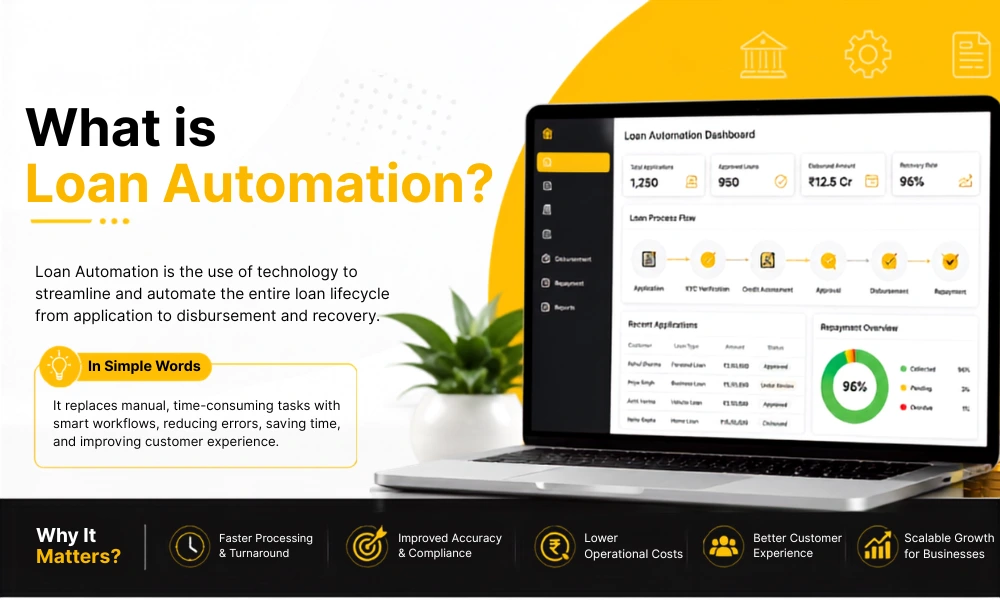
Loan automation is the process of using technology to digitize and automate every stage of the lending journey. Instead of relying on manual paperwork, spreadsheets, and repetitive administrative tasks, a Loan Management System performs these activities through predefined workflows and intelligent automation.
From the moment a customer submits a loan application, the software automatically captures customer information, verifies KYC documents, evaluates eligibility, calculates EMI schedules, routes applications for approval, disburses funds, sends repayment reminders, tracks collections, and generates business reports. Every activity is recorded digitally, ensuring transparency, security, and operational consistency.
By replacing manual processes with automated workflows, NBFCs can process more loan applications in less time while maintaining greater accuracy and compliance.
Why Loan Automation is Important for NBFCs
India’s financial ecosystem is rapidly moving toward digital lending. Customers today compare loan providers not only on interest rates but also on the speed and convenience of the borrowing experience. At the same time, regulatory requirements continue to evolve, making compliance more important than ever.
Manual lending processes often create delays, increase operational costs, and make it difficult to manage growing loan portfolios. As an NBFC expands, maintaining efficiency without automation becomes increasingly difficult.
Loan automation addresses these challenges by simplifying day-to-day operations, reducing manual intervention, improving productivity, and enabling organizations to scale efficiently. Whether an NBFC specializes in personal loans, vehicle finance, gold loans, microfinance, or consumer durable financing, automation provides a strong foundation for sustainable growth.
Key Benefits of Loan Automation for NBFCs
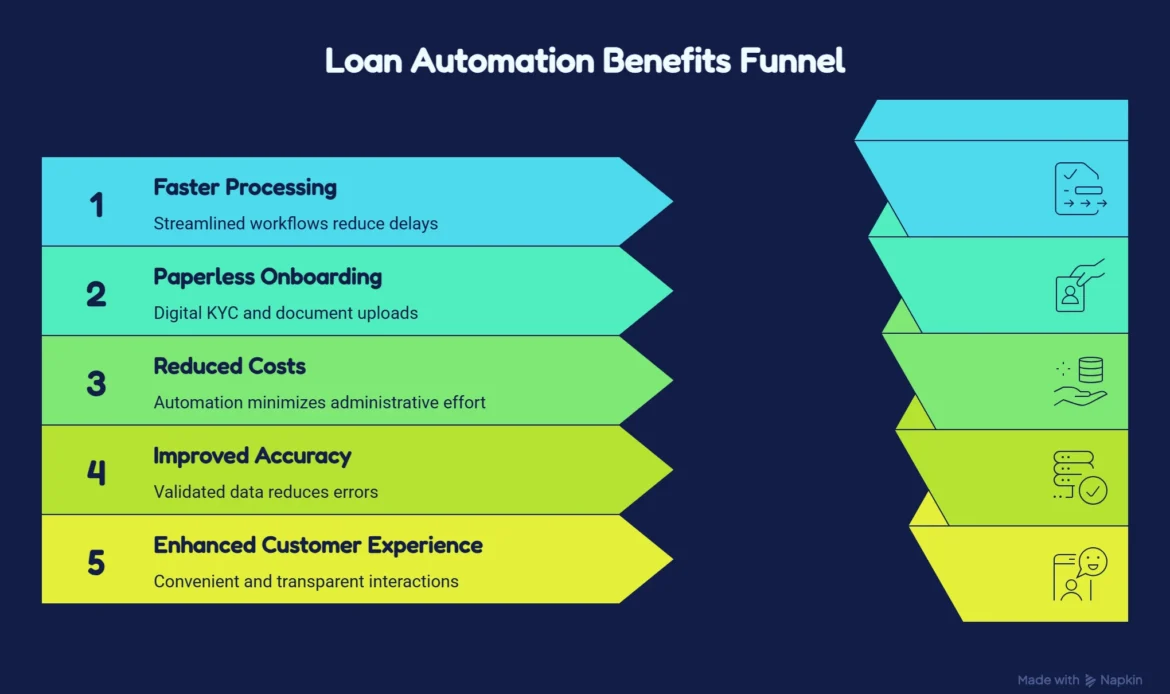
1. Faster Loan Processing and Approvals
One of the biggest advantages of loan automation is the ability to significantly reduce loan processing time. In traditional lending environments, employees spend hours manually reviewing applications, verifying customer documents, calculating repayment schedules, and coordinating approvals between departments.
An automated Loan Management System streamlines these activities through predefined workflows. Customer information is validated automatically, eligibility rules are applied instantly, and applications are routed to the appropriate decision-makers without unnecessary delays.
As a result, NBFCs can approve and disburse loans much faster, improving customer satisfaction while increasing the number of applications processed each day.
2. Paperless Customer Onboarding
Customer onboarding is often the first interaction borrowers have with a lender, making speed and convenience essential. Loan automation enables completely paperless onboarding through digital KYC verification, online document uploads, electronic forms, and digital signatures.
Instead of visiting multiple branches with physical documents, borrowers can complete most of the application process remotely. This reduces paperwork, minimizes document loss, lowers administrative costs, and creates a smoother experience for customers.
For NBFCs, digital onboarding also accelerates loan approvals and improves operational efficiency across branches.
3. Reduced Operational Costs
Manual loan processing requires substantial administrative effort, including document handling, repetitive data entry, physical file storage, and extensive back-office support. These activities increase operational expenses while limiting business scalability.
Loan automation eliminates many of these manual tasks, allowing employees to focus on higher-value activities such as customer relationship management and business development. Reduced paperwork, faster processing, and automated workflows collectively lower operating costs while improving productivity.
Over time, automation enables NBFCs to serve more customers without proportionally increasing staffing requirements.
4. Improved Accuracy and Fewer Human Errors
Manual data entry often leads to calculation mistakes, duplicate customer records, incorrect repayment schedules, and inconsistent reporting. Even minor errors can delay loan approvals or create compliance challenges.
Loan automation significantly improves data accuracy by validating customer information, performing automatic calculations, and maintaining centralized records. Standardized workflows reduce inconsistencies while ensuring that every loan follows the same approval process.
Greater accuracy not only improves operational efficiency but also strengthens customer trust.
5. Better EMI Collection and Recovery Management
Efficient EMI collection is critical to maintaining healthy cash flow and minimizing loan defaults. Manual follow-up processes can be time-consuming and inconsistent, particularly for NBFCs managing thousands of borrowers.
Modern Loan Management Software automates EMI reminders through SMS, WhatsApp, email, and mobile notifications. Customers receive timely payment reminders before due dates, while collection teams gain real-time visibility into overdue accounts.
Automation also supports digital payment links, instant payment confirmations, and automated receipt generation, making repayments more convenient for borrowers. As a result, NBFCs experience improved collection efficiency, higher recovery rates, and reduced delinquency.
6. Real-Time Loan Portfolio Monitoring
Managing a growing loan portfolio requires complete visibility into business performance. Loan automation provides interactive dashboards that display real-time information about active loans, pending approvals, overdue accounts, daily collections, branch performance, and repayment trends.
Instead of waiting for manually prepared reports, decision-makers can monitor operations instantly and identify potential risks before they become major issues. This enables faster decision-making and more effective portfolio management.
7. Enhanced Customer Experience
Today’s borrowers expect convenience at every stage of the lending journey. Long approval times, repeated branch visits, and delayed responses often result in poor customer satisfaction.
Loan automation improves the customer experience by offering online loan applications, instant status updates, digital documentation, self-service portals, and multiple online repayment options. Automated communication keeps borrowers informed throughout the process, creating transparency and building trust.
Satisfied customers are more likely to return for future loans and recommend the NBFC to others.
8. Stronger Regulatory Compliance
Compliance plays a critical role in the financial services industry. NBFCs must maintain accurate customer records, transaction histories, and audit trails while adhering to RBI guidelines and internal policies.
Loan automation simplifies compliance by maintaining secure digital records, tracking every system activity, and generating standardized reports. Automated documentation reduces the risk of missing records and helps organizations prepare for internal audits and regulatory inspections more efficiently.
9. Data-Driven Business Decisions
Modern Loan Management Software generates valuable insights that help management make informed business decisions. Reports on loan disbursement, repayment performance, collection efficiency, branch productivity, and customer behavior provide a clear understanding of operational performance.
Instead of relying on assumptions, NBFCs can use real-time analytics to identify trends, improve lending strategies, optimize collections, and enhance profitability.
10. Easy Scalability for Growing NBFCs
As an NBFC expands into new regions or launches additional lending products, managing larger customer volumes manually becomes increasingly difficult. Loan automation provides the flexibility needed to scale operations without compromising efficiency.
Cloud-based Loan Management Systems allow organizations to manage multiple branches, thousands of borrowers, and various loan products from a centralized platform. This scalability ensures that technology supports business growth rather than becoming a limitation.
Manual Loan Processing vs Loan Automation
| Manual Process | Loan Automation |
| Paper-based documentation | Digital documentation |
| Slow approvals | Faster automated approvals |
| Manual EMI calculation | Automatic EMI generation |
| Higher operational costs | Reduced operational expenses |
| Limited reporting | Real-time dashboards |
| Greater risk of human error | High data accuracy |
| Time-consuming collections | Automated EMI reminders |
| Difficult scalability | Easy business expansion |
How Loan Automation Increases NBFC Profitability
Loan automation directly impacts profitability by reducing operational costs, accelerating loan approvals, improving repayment rates, and enabling employees to manage more customers efficiently. Faster loan processing increases revenue opportunities, while automated collections reduce overdue accounts and improve cash flow.
Additionally, better reporting and portfolio visibility help management identify growth opportunities and optimize lending strategies. Over time, these improvements contribute to stronger financial performance and long-term business sustainability.
Why Choose Grin Technologies Loan Management Software?
Grin Technologies offers an end-to-end Loan Management Software solution designed specifically for NBFCs, Microfinance Institutions, Nidhi Companies, Cooperative Societies, and other financial institutions. The platform automates the complete lending lifecycle, including customer onboarding, loan origination, EMI management, digital collections, reporting, and compliance.
With cloud-based access, advanced analytics, multi-branch support, mobile collection applications, and customizable workflows, Grin Technologies enables lenders to improve operational efficiency while delivering a seamless digital lending experience.
Whether you’re managing hundreds or hundreds of thousands of borrowers, our solution is built to support your business growth.
Frequently Asked Questions (FAQs)
What is loan automation?
Loan automation is the process of using software to automate loan applications, approvals, documentation, EMI collection, repayment tracking, and reporting, reducing manual work while improving efficiency.
How does loan automation help NBFCs?
It helps NBFCs process loans faster, reduce operational costs, improve EMI collections, ensure regulatory compliance, minimize errors, and enhance customer satisfaction.
Is Loan Management Software suitable for small NBFCs?
Yes. Loan Management Software is scalable and can benefit both small and large NBFCs by improving efficiency and reducing operational complexity.
Does loan automation improve EMI collections?
Absolutely. Automated payment reminders, digital payment links, and real-time collection tracking significantly improve repayment rates and reduce overdue accounts.
Can Loan Management Software support multiple branches?
Yes. Modern cloud-based Loan Management Systems allow NBFCs to manage multiple branches, loan products, and users through a centralized platform.
Ready to Automate Your Lending Process?
Looking for a smarter way to manage loans, collections, and repayments?
👉 Book a Free Demo and see how Grin Technologies’ Loan Management Software can simplify your lending operations.
Button
Book Free Demo

