

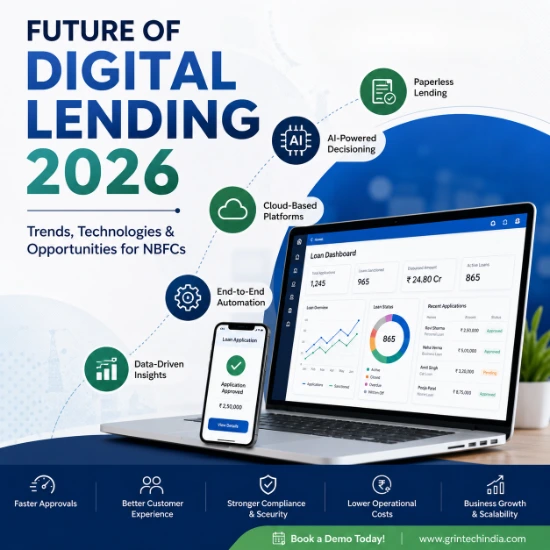
Future of Digital Lending in 2026: What Every NBFC Needs to Know
The digital lending industry is evolving faster than ever. With changing customer expectations, stricter regulatory requirements, and rapid technological advancements, 2026 is expected to become a defining year for lenders across India.
Today, borrowers expect instant approvals, paperless documentation, digital KYC, and quick loan disbursement. Traditional lending processes that rely on manual paperwork and disconnected systems are no longer sufficient to meet these expectations.
To stay competitive, financial institutions, NBFCs, microfinance companies, and digital lenders are investing in Loan Management Software (LMS), automation, artificial intelligence, and cloud-based lending platforms. These technologies not only improve operational efficiency but also enhance customer experience while reducing lending risks.
In this article, we’ll explore the biggest digital lending trends for 2026 and how organizations can prepare for the future.
Why Digital Lending Is Growing Rapidly
The demand for digital lending has increased significantly due to smartphones, internet accessibility, digital payments, and improved identity verification systems.
Modern borrowers want convenience. Instead of visiting branches multiple times, they prefer applying for loans online, uploading documents digitally, and receiving approvals within hours.
For lenders, digital lending offers several advantages:
- Faster loan processing
- Reduced operational costs
- Better customer experience
- Improved compliance
- Lower chances of manual errors
- Enhanced fraud detection
- Real-time loan tracking
As competition increases, lenders who embrace digital transformation will have a significant advantage over those relying on traditional methods.

Top Digital Lending Trends in 2026
1. AI-Powered Loan Decisioning
Artificial Intelligence is transforming loan approvals.
Instead of relying solely on manual credit evaluations, AI models can analyze multiple data points, including repayment history, spending patterns, transaction behavior, and financial stability.
Benefits include:
- Faster approvals
- Better credit assessment
- Reduced human errors
- Lower default rates
- Improved customer experience
AI also helps lenders identify high-risk applications before loan disbursement.
2. End-to-End Loan Automation
Automation is becoming a necessity rather than a luxury.
Modern Loan Management Software automates the entire lending lifecycle, including:
- Customer onboarding
- Digital KYC
- Loan application
- Document verification
- Loan approval
- EMI scheduling
- Payment reminders
- Collections
- Recovery management
Automation reduces repetitive manual work and allows employees to focus on customer relationships and strategic tasks.
3. Cloud-Based Loan Management Systems
Cloud technology is helping lenders become more agile and scalable.
Instead of maintaining expensive on-premise servers, organizations are moving toward cloud-based lending platforms that provide:
- Remote accessibility
- Automatic updates
- Better scalability
- Improved disaster recovery
- Secure data storage
Cloud solutions also make it easier for distributed teams to collaborate efficiently.
4. Paperless Lending
Borrowers increasingly prefer digital documentation over physical paperwork.
With e-KYC, digital signatures, and secure document uploads, lenders can significantly reduce processing time while improving customer convenience.
Paperless lending also helps reduce administrative costs and supports environmentally sustainable operations.
5. Data-Driven Risk Management
One of the biggest advantages of digital lending is access to real-time data.
Modern lending platforms provide dashboards that help lenders monitor:
- Loan performance
- Collection efficiency
- Delinquency rates
- Portfolio health
- Risk exposure
These insights enable better decision-making and proactive risk management.
Traditional Lending vs Digital Lending
| Feature | Traditional Lending | Digital Lending |
| Loan Processing | Manual | Automated |
| Documentation | Paper-Based | Digital |
| Approval Time | Days | Minutes or Hours |
| Customer Experience | Limited | Excellent |
| Data Accuracy | Moderate | High |
| Operational Cost | High | Lower |
| Real-Time Reporting | Limited | Available |
| Scalability | Moderate | High |
How Loan Management Software Supports Digital Lending
A robust Loan Management Software serves as the backbone of digital lending operations.
It enables lenders to manage the complete loan lifecycle from application to repayment within a single platform.
Key capabilities include:
- Loan origination
- Automated approvals
- EMI management
- Customer management
- Collection tracking
- Recovery management
- Analytics and reporting
- Document management
- Workflow automation
These features help organizations improve productivity while delivering faster services to borrowers.
Real Example
Many leading NBFCs in India have adopted digital-first lending models to streamline operations, reduce turnaround time, and improve customer experience. Publicly available case studies across the industry show that automation, digital onboarding, and centralized loan management have helped lenders process applications faster while improving operational efficiency. The exact technology stack and software vendors vary by institution, but the overall trend toward digital lending continues to accelerate.
Challenges That Lenders Must Address
Despite its advantages, digital lending also presents challenges.
Organizations should focus on:
- Data security
- Regulatory compliance
- Fraud prevention
- Cybersecurity
- System scalability
- Employee training
- Customer education
Choosing the right technology partner plays a crucial role in overcoming these challenges.
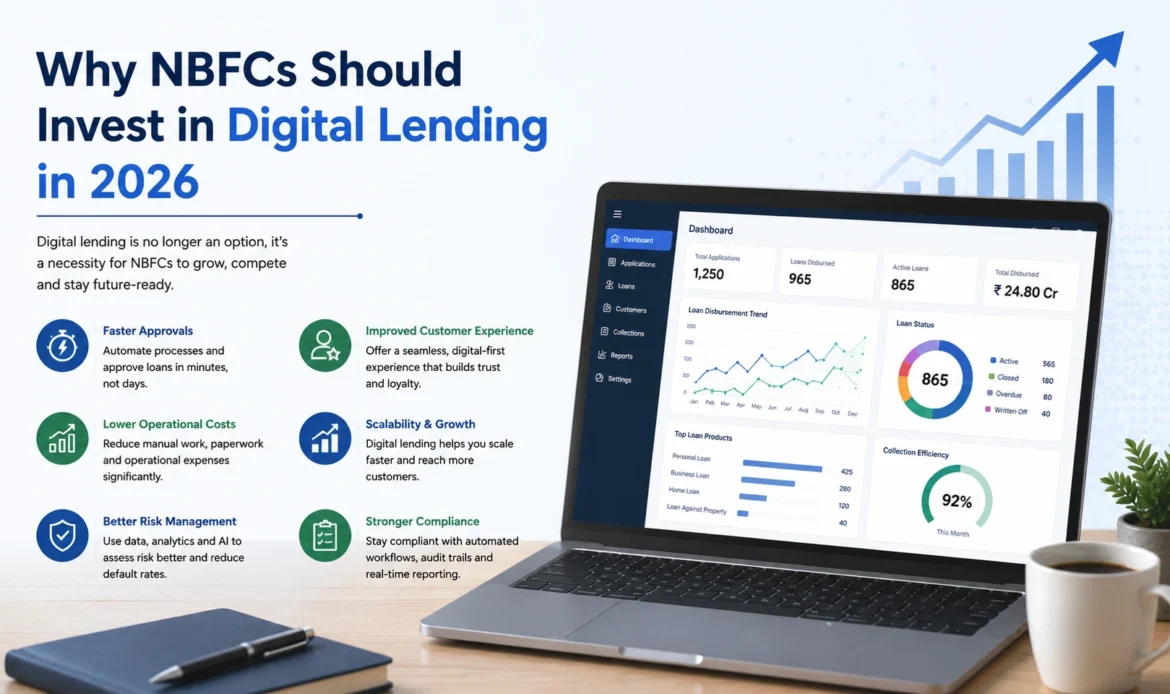
Why NBFCs Should Invest in Digital Lending in 2026
The lending industry is becoming increasingly competitive.
Borrowers expect:
- Faster approvals
- Transparent processes
- Online access
- Flexible repayment
- Better support
An advanced Loan Management Software helps NBFCs meet these expectations while improving internal efficiency and reducing operational costs.
Conclusion
The future of digital lending in 2026 is driven by automation, artificial intelligence, cloud computing, and data-driven decision-making. Financial institutions that invest in modern lending technologies will be better positioned to deliver faster, more secure, and customer-centric lending experiences.
For NBFCs, microfinance institutions, Nidhi companies, and digital lenders, adopting a scalable Loan Management Software is no longer just a technology upgrade—it is a strategic investment for sustainable growth.
If you’re looking to modernize your lending operations, explore Grin Technologies’ Loan Management Software to automate your complete lending lifecycle—from loan origination and approval to collections, recovery, and reporting.
Frequently Asked Questions
1. What is digital lending?
Digital lending is the process of offering loans using online platforms, automated workflows, and digital documentation instead of traditional paper-based methods.
2. Why is digital lending important for NBFCs?
It helps reduce processing time, improve customer experience, lower operational costs, and ensure better compliance.
3. What is Loan Management Software?
Loan Management Software is a platform that automates loan origination, approval, EMI tracking, collections, recovery, reporting, and customer management.
4. Is cloud-based Loan Management Software secure?
Cloud-based solutions can provide strong security features such as encryption, access controls, backups, and monitoring when implemented following industry best practices.
5. What technologies will shape digital lending in 2026?
Artificial Intelligence, automation, cloud computing, digital KYC, analytics, and API integrations are expected to be key technologies driving digital lending.
Ready to Automate Your Lending Process?
Looking for a smarter way to manage loans, collections, and repayments?
👉 Book a Free Demo and see how Grin Technologies’ Loan Management Software can simplify your lending operations.
Button
Book Free Demo

