


Introduction
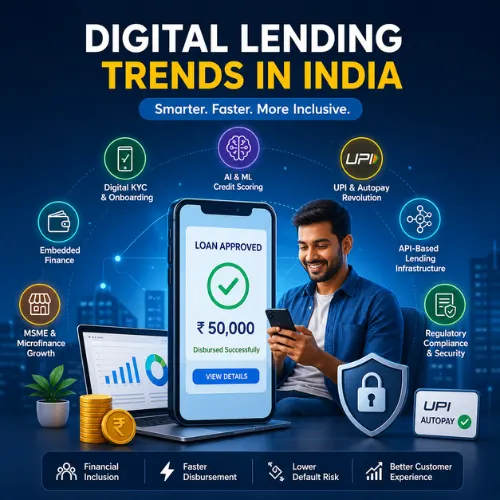
Digital lending trends in India are evolving faster than ever, driven by fintech innovation, regulatory support, and massive digital adoption. Over the last few years, lending has shifted from branch-based approvals to instant mobile-based disbursements. Today, borrowers expect quick approvals, minimal documentation, and flexible repayment options.
For NBFCs, microfinance institutions, and fintech platforms, these digital lending trends in India are not just innovations—they are business-critical shifts that directly impact customer acquisition, risk management, and profitability.
What is Digital Lending?
Digital lending is the process of offering loans through online platforms using technology like mobile apps, APIs, automation tools, and data analytics.
Unlike traditional lending, where approvals can take days or weeks, digital lending enables:
- Loan approvals within minutes
- Completely paperless processes
- Real-time risk assessment
- Automated repayment tracking
Key Components Explained
- Online Loan Applications: Customers can apply anytime, anywhere without visiting a branch.
- Automated Credit Assessment: Systems evaluate borrower eligibility instantly using algorithms.
- Digital KYC: Aadhaar-based or video KYC verifies identity quickly.
- Instant Disbursement: Funds are transferred directly to bank accounts within hours or minutes.
- Automated EMI Collection: Payments are collected via UPI AutoPay, eMandates, or NACH.
Top Digital Lending Trends in India (Detailed Analysis)

1. AI & Machine Learning in Credit Scoring
AI and ML are transforming how lenders assess borrower risk.
What’s Changing?
Traditional credit scoring relied mainly on bureau data like CIBIL scores. But millions of Indians lack formal credit history. AI solves this gap by analyzing alternative data.
Data Points Used:
- Bank transaction patterns
- Utility bill payments
- Mobile recharge behavior
- E-commerce spending
- Social and behavioral signals
Why It Matters:
- Expands lending to underserved populations
- Reduces dependency on traditional credit bureaus
- Improves accuracy in predicting defaults
Business Impact:
NBFCs can safely lend to new-to-credit users while maintaining risk control, leading to higher loan book growth.
2. Rise of Embedded Finance
Embedded finance is one of the fastest-growing digital lending trends in India.
What It Means:
Loans are offered directly within non-financial platforms, eliminating the need to visit a separate lending app.
Real-World Use Cases:
- E-commerce platforms offering BNPL at checkout
- EdTech apps providing student loans
- Ride-hailing platforms offering driver financing
- B2B platforms offering invoice financing
Advantages:
- Seamless customer experience
- Higher loan conversion rates
- Lower customer acquisition cost
Strategic Value:
Lenders gain access to pre-qualified customers based on platform data, improving approval efficiency and reducing risk.
3. UPI & Auto-Debit Revolution
UPI has become the backbone of digital payments in India, and its role in lending is growing rapidly.
Key Innovations:
- UPI AutoPay: Enables automatic EMI deductions
- Real-Time Payments: Instant settlement reduces delays
- Digital Reminders: Automated alerts improve repayment discipline
Benefits for Lenders:
- Reduced collection costs
- Lower default rates due to timely payments
- Better visibility into borrower repayment behavior
Benefits for Borrowers:
- Hassle-free EMI payments
- No need for manual transactions
- Greater transparency
4. Digital KYC & Paperless Onboarding
Customer onboarding has drastically improved due to digital KYC advancements.
Types of KYC:
- Aadhaar-based eKYC
- Video KYC
- OTP-based verification
Detailed Benefits:
- Reduces onboarding time from days to minutes
- Eliminates physical paperwork
- Minimizes human errors
- Enhances compliance and audit trails
Operational Impact:
Lenders can scale rapidly without increasing operational teams, making it easier to expand across regions.
5. Growth of MSME & Microfinance Lending
Access to credit for small businesses has significantly improved due to digital lending.
Why This Segment is Growing:
- GST data provides reliable income insights
- Digital payments create transaction history
- Government initiatives support MSMEs
Loan Types Increasing:
- Working capital loans
- Invoice financing
- Equipment financing
- Microloans for rural entrepreneurs
Impact on Economy:
- Boosts small business growth
- Encourages entrepreneurship
- Supports rural and semi-urban development
6. API-Based Lending Infrastructure
Modern digital lending platforms rely heavily on APIs (Application Programming Interfaces).
What APIs Enable:
- Integration with credit bureaus
- Real-time bank statement analysis
- Payment gateway connections
- Third-party risk assessment tools
Advantages:
- Faster system deployment
- Easy scalability
- Seamless user experience
Example Workflow:
A borrower applies → API fetches bank data → AI evaluates risk → loan is approved → funds are disbursed—all within minutes.
7. Regulatory Focus & Compliance
Regulation plays a critical role in shaping digital lending trends in India.
Key Regulatory Areas:
- Data privacy and consent
- Transparent loan disclosures
- Restrictions on unauthorized lending apps
- Digital lending guidelines by RBI
Why It’s Important:
- Protects borrowers from fraud
- Builds trust in digital platforms
- Ensures long-term sustainability of fintech businesses
For Lenders:
Compliance is no longer optional—it is a competitive advantage.
Challenges in Digital Lending in India (In Depth)
1. Data Security Risks
Handling sensitive financial data increases the risk of cyber threats. Lenders must invest in encryption and secure infrastructure.
2. Credit Risk in New Segments
Serving new-to-credit customers increases uncertainty. Advanced analytics is required to manage defaults.
3. Regulatory Complexity
Frequent updates from regulators require continuous system upgrades and legal alignment.
4. Trust Deficit
Some users still hesitate to adopt digital lending due to fear of fraud or hidden charges.
Opportunities for NBFCs & Fintechs
1. Financial Inclusion at Scale
Digital platforms can reach remote areas where traditional banking is limited.
2. Cost Optimization
Automation reduces manpower and operational expenses.
3. Faster Market Expansion
Cloud-based lending systems allow pan-India scalability.
4. Personalized Lending
Data analytics enables customized loan offers based on user behavior.
How to Leverage Digital Lending Trends in India
To fully capitalize on these trends:
1. Implement Loan Management Software
Automate end-to-end loan lifecycle—from onboarding to collections.
2. Use Advanced Analytics
Leverage AI for smarter credit decisions and fraud detection.
3. Build Mobile-First Solutions
Ensure seamless mobile experience, as most users prefer smartphones.
4. Strengthen Collections Strategy
Adopt UPI AutoPay, reminders, and digital tracking systems.
5. Focus on Compliance
Stay aligned with regulatory guidelines to avoid penalties and build trust.
Future of Digital Lending Trends in India
The future of digital lending trends in India is driven by technology and innovation.
Upcoming Developments:
- Hyper-personalized loans using AI
- Blockchain for secure transactions
- Deeper integration of embedded finance
- Expansion into rural markets
India is on track to become a global hub for digital lending innovation.
Conclusion
Digital lending trends in India are reshaping the financial ecosystem by making credit faster, more accessible, and data-driven. From AI-powered credit models to UPI-based collections, every aspect of lending is becoming smarter and more efficient.
For NBFCs and fintech companies, the key to success lies in adopting the right technology, ensuring regulatory compliance, and delivering a seamless customer experience.
Call-to-Action
If you want to grow your lending business and stay ahead of digital lending trends in India, now is the time to go fully digital.
Upgrade your systems, automate your operations, and deliver faster, smarter lending experiences—because the future belongs to digital-first lenders.
