

RBI Compliance Resource Hub for Indian Lenders
India’s lending ecosystem has evolved significantly over the past few years. Loan applications, customer onboarding, document verification, repayments, and collections are now handled through digital platforms. While this has improved operational efficiency, it has also increased the responsibility of lenders to comply with the regulations issued by the Reserve Bank of India (RBI).
Whether you operate an NBFC, fintech company, cooperative credit society, housing finance company, or any other regulated lending institution, compliance should be an integral part of your daily operations. Following RBI guidelines is not only necessary for meeting regulatory expectations but also for building customer confidence, reducing operational risks, and maintaining business credibility.
An RBI Compliance Resource Hub serves as a centralized knowledge center where lenders can access simplified explanations of important RBI regulations, compliance requirements, official circulars, and industry best practices. Instead of searching through multiple documents, teams can refer to a single resource that is regularly updated with the latest regulatory developments.
Why Every Indian Lender Needs an RBI Compliance Resource Hub
Compliance requirements continue to evolve as the financial industry adopts new technologies and lending models. Managing these changes manually can become challenging, especially for organizations operating across multiple branches or serving a large customer base.
A dedicated compliance hub provides several benefits.
Keeps Teams Updated
Employees from operations, collections, customer support, credit, legal, and technology departments can access the latest compliance information in one place. This helps reduce misunderstandings and ensures consistent implementation across teams.
Improves Customer Trust
Customers are more likely to engage with lenders that clearly communicate how they protect personal information, verify identities, and follow RBI regulations.
Supports Internal Audits
Maintaining documented compliance procedures makes internal and external audits easier. Teams can quickly demonstrate that appropriate controls and processes are in place.
Reduces Operational Risks
A structured compliance process minimizes manual errors, incomplete documentation, delayed reporting, and regulatory non-compliance.
RBI Digital Lending Guidelines
Digital lending has transformed the borrowing experience by allowing customers to apply for loans through websites and mobile applications. However, digital convenience should never compromise customer protection.
To promote responsible lending practices, RBI introduced Digital Lending Guidelines that define how regulated entities and lending service providers should operate.
Some of the major requirements include:
Transparent Loan Information
Before accepting a loan, customers should clearly understand:
- Interest rate
- Processing fees
- Repayment schedule
- Penalty charges
- Total borrowing cost
- Terms and conditions
Providing complete information helps customers make informed financial decisions.
Direct Loan Disbursement
Loan amounts should generally move directly between the regulated lender’s account and the borrower’s account. This improves transparency and reduces unnecessary intermediaries.
Customer Consent
Customer information should only be collected after obtaining clear consent. Borrowers should understand why their information is being collected and how it will be used.
Consent records should also be maintained for future reference.
Data Privacy
Only information required for loan processing should be collected. Organizations should avoid collecting unnecessary personal data and should implement appropriate safeguards to protect customer information.
Grievance Redressal
Every lender should establish a structured customer grievance mechanism. Customers should know where to raise complaints and how those complaints will be resolved.
Maintaining clear communication throughout the lending process improves customer satisfaction and supports regulatory compliance.
KYC and AML Compliance
Know Your Customer (KYC) and Anti Money Laundering (AML) requirements are among the most important compliance responsibilities for financial institutions.
KYC helps lenders verify the identity of customers before establishing a financial relationship, while AML measures help identify suspicious financial activities and reduce the risk of financial crimes.
Customer Identity Verification
Lenders should verify customer identity using officially accepted documents and approved verification processes.
A standard KYC process generally includes:
- Identity verification
- Address verification
- PAN verification
- Photograph verification
- Customer due diligence
- Risk categorization
Completing these checks before loan approval helps reduce fraud and strengthens lending decisions.
Ongoing Customer Monitoring
Compliance does not end after customer onboarding.
Lenders should periodically review customer information, especially for high-risk accounts. Updated KYC records help maintain accurate customer profiles and support regulatory requirements.
Suspicious Transaction Monitoring
Organizations should establish processes to identify unusual transactions that may indicate fraudulent activity or money laundering.
Monitoring large transactions, irregular repayment patterns, or inconsistent customer behavior allows institutions to investigate potential risks at an early stage.
Record Maintenance
Maintaining complete KYC records is essential for future audits, customer verification, and regulatory inspections.
Proper documentation also reduces operational disputes and improves transparency across lending operations.
Credit Bureau Reporting
Credit bureau reporting plays an important role in India’s credit ecosystem. It enables financial institutions to assess borrower creditworthiness while helping customers build a reliable credit history.
Incorrect reporting can negatively affect customer credit scores and create unnecessary operational challenges.
To maintain reporting accuracy, lenders should focus on:
Accurate Customer Information
Verify customer identification details before submitting loan information to credit bureaus.
Timely Reporting
Loan disbursements, EMI payments, overdue accounts, settlements, and loan closures should be reported within applicable reporting timelines.
Regular Data Validation
Periodic reconciliation between internal loan records and bureau submissions helps identify discrepancies before they affect customer records.
Prompt Error Resolution
If customers report incorrect bureau information, lenders should investigate the issue promptly and take corrective action where necessary.
Accurate bureau reporting not only supports regulatory expectations but also strengthens customer confidence in the lending institution.
Audit Trail Compliance
Maintaining a complete audit trail is one of the most important requirements for financial institutions. Every loan application, approval, modification, payment, and customer interaction should leave a digital record that can be reviewed whenever required.
An audit trail records who performed an action, when it was performed, and what changes were made. These records improve transparency, strengthen internal controls, and make regulatory audits much easier.
Why Audit Trails Matter
Without proper audit logs, it becomes difficult to identify unauthorized activities or investigate operational issues. Audit trails help organizations maintain accountability and demonstrate that all business processes follow approved procedures.
They also support internal investigations, customer dispute resolution, and regulatory inspections.
What Should Be Recorded?
A robust audit trail should capture:
- User login and logout activity
- Loan application submissions
- Loan approval and rejection history
- Customer profile updates
- Document uploads and modifications
- EMI schedule changes
- Payment transactions
- Collection activities
- User permission changes
- System-generated alerts and notifications
Maintaining these records in a secure environment ensures that information remains available whenever required by auditors or regulators.
Default Loss Guarantee (DLG)
Default Loss Guarantee (DLG) has become an important framework for partnerships between regulated lenders and lending service providers. It defines how credit risk can be shared while ensuring that customer interests remain protected.
Organizations using DLG arrangements should establish clear agreements that define the responsibilities of each participating entity.
Key Areas to Focus On
- Clearly documented contractual agreements
- Transparent risk-sharing arrangements
- Defined responsibilities for both parties
- Continuous monitoring of loan performance
- Proper reporting and documentation
- Regular review of guarantee arrangements
Well-managed DLG practices help organizations reduce operational uncertainty while maintaining compliance with applicable RBI guidelines.
Data Governance
Financial institutions manage a large volume of customer information every day. Personal identity documents, income details, repayment history, banking information, and loan records must all be protected throughout their lifecycle.
A strong data governance framework ensures that customer information remains secure, accurate, and accessible only to authorized personnel.
Best Practices for Data Governance
Role-Based Access
Employees should only access information necessary for their responsibilities. Limiting access reduces the risk of unauthorized data exposure.
Data Encryption
Sensitive customer information should be encrypted while being stored and transmitted. Encryption helps protect data even if unauthorized access occurs.
Secure Document Storage
Loan documents, identity proofs, agreements, and repayment records should be stored securely with controlled access and backup mechanisms.
Data Backup
Regular backups help organizations recover critical business information in case of system failures or unexpected incidents.
Data Retention
Organizations should establish policies defining how long customer records are retained and when they should be securely archived or deleted according to applicable regulations.
Customer Consent Management
Customers should understand how their personal information is collected, stored, processed, and shared. Maintaining documented consent records improves transparency and supports regulatory compliance.
How Loan Management Software Supports RBI Compliance
Managing compliance manually becomes increasingly difficult as loan volumes grow. A modern Loan Management Software helps lenders automate routine processes while maintaining accurate records throughout the lending lifecycle.
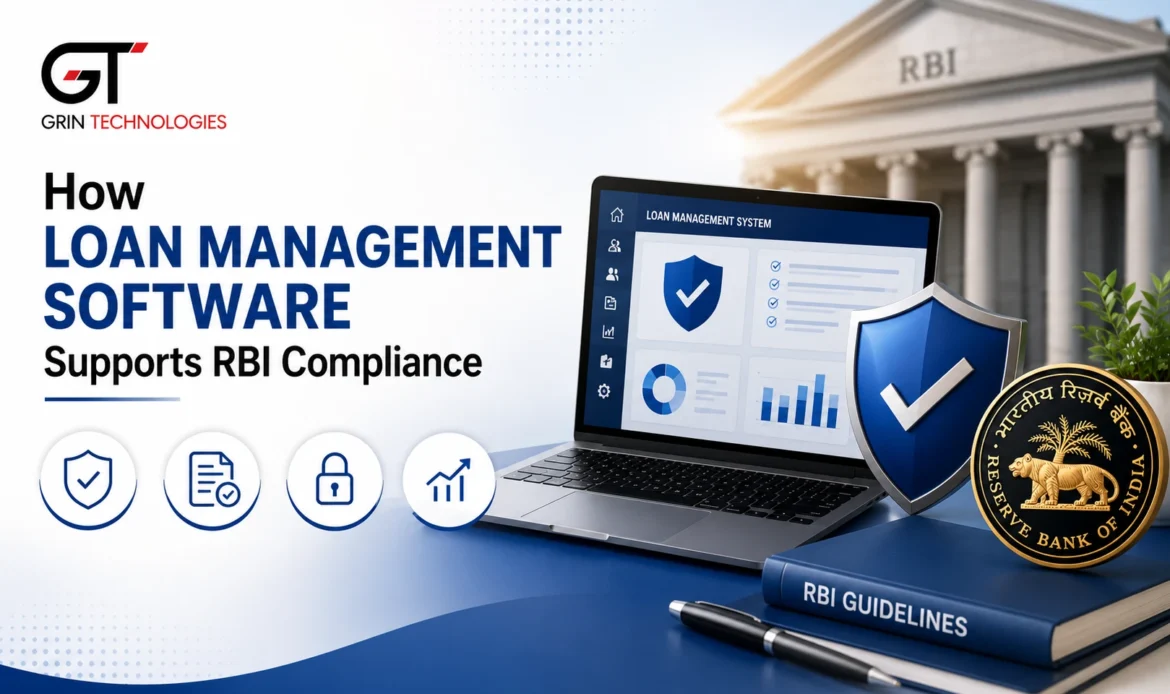
Key capabilities include:
Digital Customer Onboarding
Capture customer information digitally while maintaining complete onboarding records.
KYC Verification
Simplify identity verification by integrating approved KYC workflows into the loan application process.
Centralized Document Management
Store loan agreements, customer documents, and verification records securely in one place.
Automated EMI Tracking
Track repayment schedules, overdue accounts, and payment history with minimal manual intervention.
Audit Logs
Maintain complete records of user activity, approvals, payment updates, and customer interactions.
Credit Bureau Integration
Reduce manual reporting efforts by integrating loan information with supported credit bureau processes.
Reports and Dashboards
Generate operational and compliance reports that help management monitor lending activities and identify areas requiring attention.
A well-designed Loan Management Software supports operational efficiency while helping organizations maintain consistent compliance practices.
Periodic Compliance Review Process
Compliance is not a one-time activity. RBI regulations may change over time, making it essential for organizations to review their compliance resources regularly.
Monthly Review
- Monitor RBI announcements and circulars.
- Track changes affecting lending operations.
- Identify new compliance requirements.
Quarterly Review
- Review all compliance articles.
- Verify references and official links.
- Update examples where necessary.
- Refresh internal links.
Annual Review
- Conduct a complete compliance audit.
- Validate content with a qualified compliance or legal professional.
- Update SEO elements.
- Review customer guidance and FAQs.
Every compliance page should display a Last Reviewed date so visitors know when the information was most recently updated.
Official RBI Resources
Every compliance page should reference official RBI publications instead of relying on third-party sources.
Useful resources include:
- RBI Master Directions
- RBI Digital Lending Guidelines
- RBI Master Direction – Know Your Customer (KYC)
- RBI Notifications and Circulars
Using official references improves credibility and helps readers verify the latest regulatory information.
Frequently Asked Questions
What is an RBI Compliance Resource Hub?
It is a centralized knowledge base that explains RBI regulations, compliance requirements, official guidelines, and best practices for lenders in a structured and easy-to-understand format.
Who should use this resource?
NBFCs, fintech companies, housing finance companies, cooperative credit institutions, digital lenders, and lending startups can all benefit from a compliance resource hub.
Why is KYC important?
KYC helps lenders verify customer identities, reduce fraud, and comply with regulatory requirements before approving loans.
What is the purpose of an audit trail?
Audit trails maintain complete records of business activities, helping organizations improve accountability, resolve disputes, and support regulatory audits.
Why is data governance important?
Strong data governance protects customer information, improves data accuracy, reduces operational risks, and supports regulatory compliance.
How often should compliance content be updated?
Compliance resources should be reviewed regularly, especially whenever RBI releases new circulars, master directions, or regulatory updates.
Can Loan Management Software help with compliance?
Yes. A Loan Management Software can simplify customer onboarding, document management, repayment tracking, reporting, audit logging, and operational monitoring, making compliance processes more organized.
Why should organizations refer to official RBI guidelines?
Official RBI publications provide the latest regulatory information and reduce the risk of relying on outdated or inaccurate interpretations.
Conclusion
Regulatory compliance is an essential part of responsible lending. As the financial sector continues to adopt digital processes, lenders must ensure that every stage of the loan lifecycle follows applicable RBI regulations.
An RBI Compliance Resource Hub provides a practical way to organize regulatory information, educate employees, improve customer transparency, and reduce operational risks. By covering Digital Lending Guidelines, KYC, AML, Credit Bureau Reporting, Audit Trails, Default Loss Guarantee, and Data Governance in one place, organizations can build a reliable compliance framework that supports long-term growth.
Regular content reviews, references to official RBI publications, expert validation, and clear legal disclaimers further strengthen the reliability of the resource hub. Combined with a secure Loan Management Software, these practices help lenders streamline operations while maintaining compliance with evolving regulatory expectations.
Legal Disclaimer
Disclaimer: This article is intended for general informational purposes only and should not be considered legal, regulatory, or professional advice. While every effort has been made to keep the information accurate and current, regulatory requirements may change over time. Organizations should consult qualified legal or compliance professionals before making regulatory or business decisions.

